I’m calling this video “Session 7.5” because it’s not just a recap. You can work through the video below, on your own time, to learn the Meisner approach to “Learning the Lines”. But first some administrative notes:
Our Ongoing Meisner Workshop
We plan to teach 8-week intensives (like the one you’re finishing now) twice per year. When we’re not doing that, we will be meeting weekly for ongoing two-hour workshops on Saturday afternoons. They are free and open to the public! We’ll go deeper on Meisner and other acting topics, but it’s also a place to help prepare when you have an audition or a role coming up.
Follow Us:
Join us where it’s convenient for you. Workshop announcements will go to all these channels:
The following excerpt from the 8-hour Archival Meisner footage has Meisner working with actress Frances Sternhagen (who some of you might remember as Cliff Clavin’s mother on TV’s “Cheers”), on emotional preparation for a Spoon River script. I think this part is especially good. And if you could watch up to 3:10:00, that would be great. That’s about 18 minutes of viewing time, but well worth it in my opinion:
In session 6 we built upon our understanding of Emotional Preparation, and got into talking about learning words.
Here Meisner highlights the importance of learning lines by rote, as opposed to memorizing the tonality you’re planning to say them with. (Remember that you shouldn’t be planning your emotions; that part should be spontaneous.)
Optional Deep Dive on Text Analysis in Meisner work:
Learning the Lines
Step 1: Reading the Scene
Simply read the lines, quietly to yourself. Resist the urge to judge how the lines ought to be delivered.
Step 2: Rewriting the Scene
Write the scene out by hand, in all lower case, without punctuation or formatting.
Step 3: Relate the Scene to the Exercise
Write down everything important to the character
What emotional preparation might you do for this exercise?
You have to fall in love with a character in order to play them – even (especially) if they’re despicable
The Script is your Bible
Step 4: The Mechanical Reading
Read the text aloud with no inflection. Slow and relaxed. Syllable by syllable
“Mechanical” reading makes it impossible to act, giving time for the circumstances to take root in your imagination.
Step 5: The Working Reading
“Be with” your partner. Look at each other, only looking down at the script to grab some words.
Goal: Really talk, really listen
Don’t talk at your script.
As your partner speaks, give them your full attention.
Step 6: “Warming Up”
This is not a full emotional preparation – but allow the imaginary circumstances to take hold in your mind now that you’re more familiar with the dialogue.
Session 5 (Oct 18, 2025)
In session 5 we reviewed emotional preparation, and the process of choosing an emotional direction and entering into a free-form daydream to evoke that state. We also introduced “sleeping on stage”, which uses the same emotional preparation process to create the appearance of dreaming on stage. Last, we used emotional preparation as part of “Coming Home to Be Alone”.
By now we hope you have selected a script from Spoon River Anthology (or another one of your choosing). Even if you don’t plan on doing one in our 8th and final session (on November 8th), it would be great to have something to work with as we step through books 3 and 4 of Meisner Complete (Learning the Lines and Playing the Part, respectively). See you on October 25th!
Session 4 (Oct 4, 2025)
In session 4, our topic was Emotional Preparation.
In Meisner work, your emotional life comes from your unfolding connection with your partners in a scene. But what about your first moment on stage? The script might call for you arrive on stage in an elevated emotional state. Emotional Preparation is the Meisner approach to arriving on the stage with the emotional power and depth that the scene calls for.
Importantly, the circumstances of your daydream may or may not have anything to do with the imaginary circumstances of the scene. You must find what works for you, understanding that the same daydream might not do anything for someone else.
But don’t be precious about your preparation. Have the daydream, enter the scene with that energy, but then immediately start deriving your emotional life from the unfolding of your interaction with your partner(s) in the scene. As that shift happens, let go of your preparation; that moment is over.
It’s actually quite simple. It just takes a few years to learn
– Sanford Meisner
Session 3 (Sept 27, 2025)
We will NOT meet Saturday October 11, due to UT Fall Break. See you on Saturday October 18!
For session 3 we introduced the Independent Activity. Independent activities train us to inhabit a reality; to inhabit a set of imaginary circumstances. In a play or film, this reality would come from the script. In a workshop, we create these activities ourselves.
A good independent activity should be Specific, Difficult, Safe, and Possible
SPECIFIC You have to know when you’re done with the task. Stanislavski said, “Generality is the enemy of all art.”
DIFFICULT Your activity should be physically difficult, as opposed to mentally or emotionally difficult.
SAFE Respect yourself, others in the room, and the space.
POSSIBLE If you know that the activity is impossible to accomplish, you won’t make a full commitment.
Strengthening the muscles of your “doing”, over time, strengthens your ability to accept imaginary circumstances and behave truthfully within them.
Session 3 Recap Video
Recommended Reading (Optional) Amazon links are for your convenience; we don’t earn a commission if you buy the book via the link.
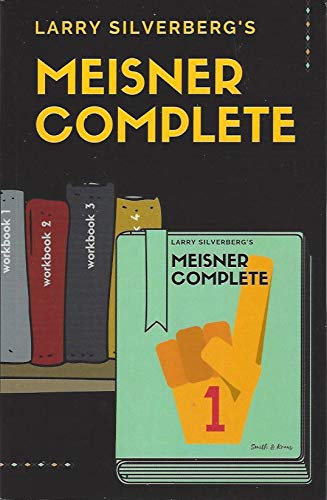
Meisner Complete by Larry Silverberg This 332-page is a collection of four Meisner workbooks; (1) The Core, (2) The Emotional Instrument, (3) Tackle the Text, and (4) Play the Part. Our community education course focuses on the first book, “The Core”.
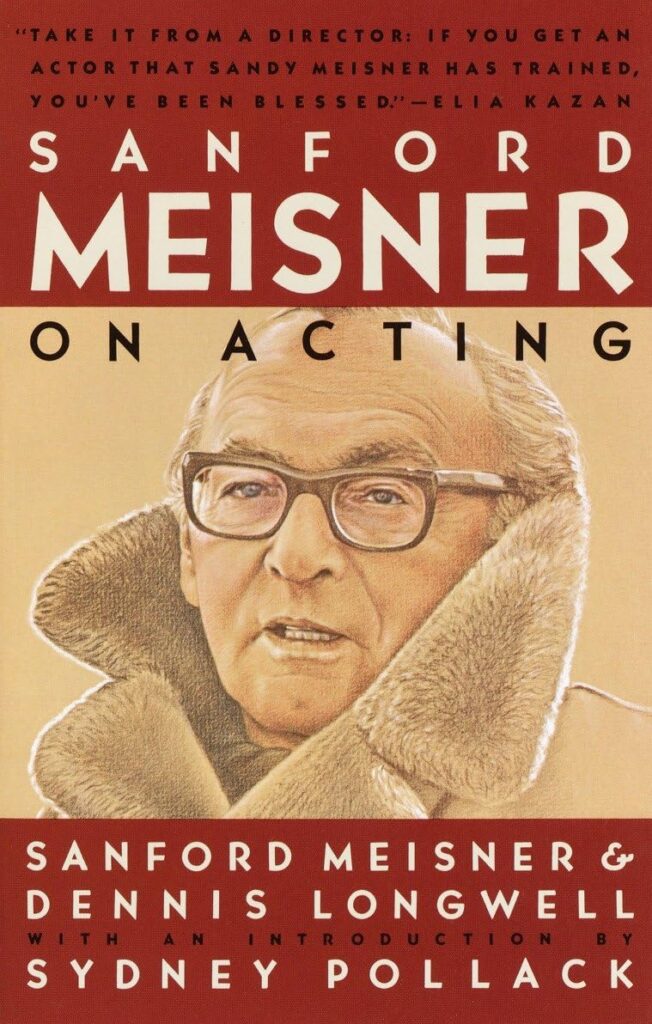
Sanford Meisner on Acting by Sanford Meisner & Dennis Longwell This book follows sixteen students through a 15-month progression as direct students of Meisner go from the rudimentary exercises through their performance of contemporary American plays.
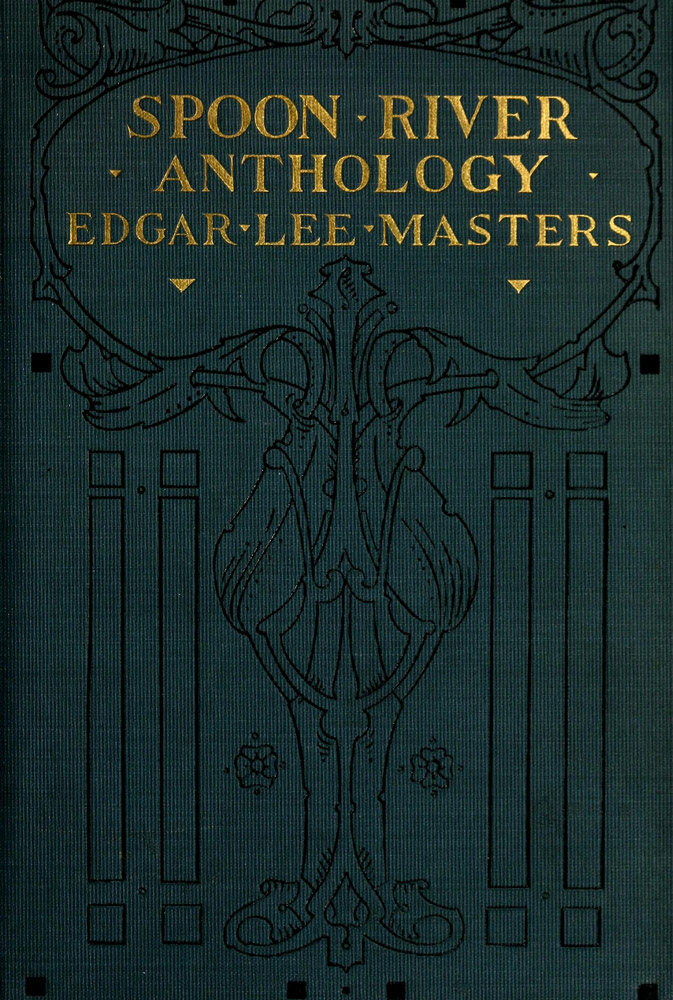
Spoon River Anthology by Edgar Lee Masters Spoon River (1915) is a collection of “Epitaphs”; poems written from the perspective of deceased residents of Spoon River. Meisner used these short texts to bring together all the pieces of the Meisner technique. In the 8th and final session of our course, you’ll have the option (but not the requirement) to deliver a monologue from Spoon River or a different short monologue of your choosing.
Videos
Eight Hours of rare archival Meisner Instruction filmed in 1980 (Part 1 | Part 2)